
The Lion & the Rabbit
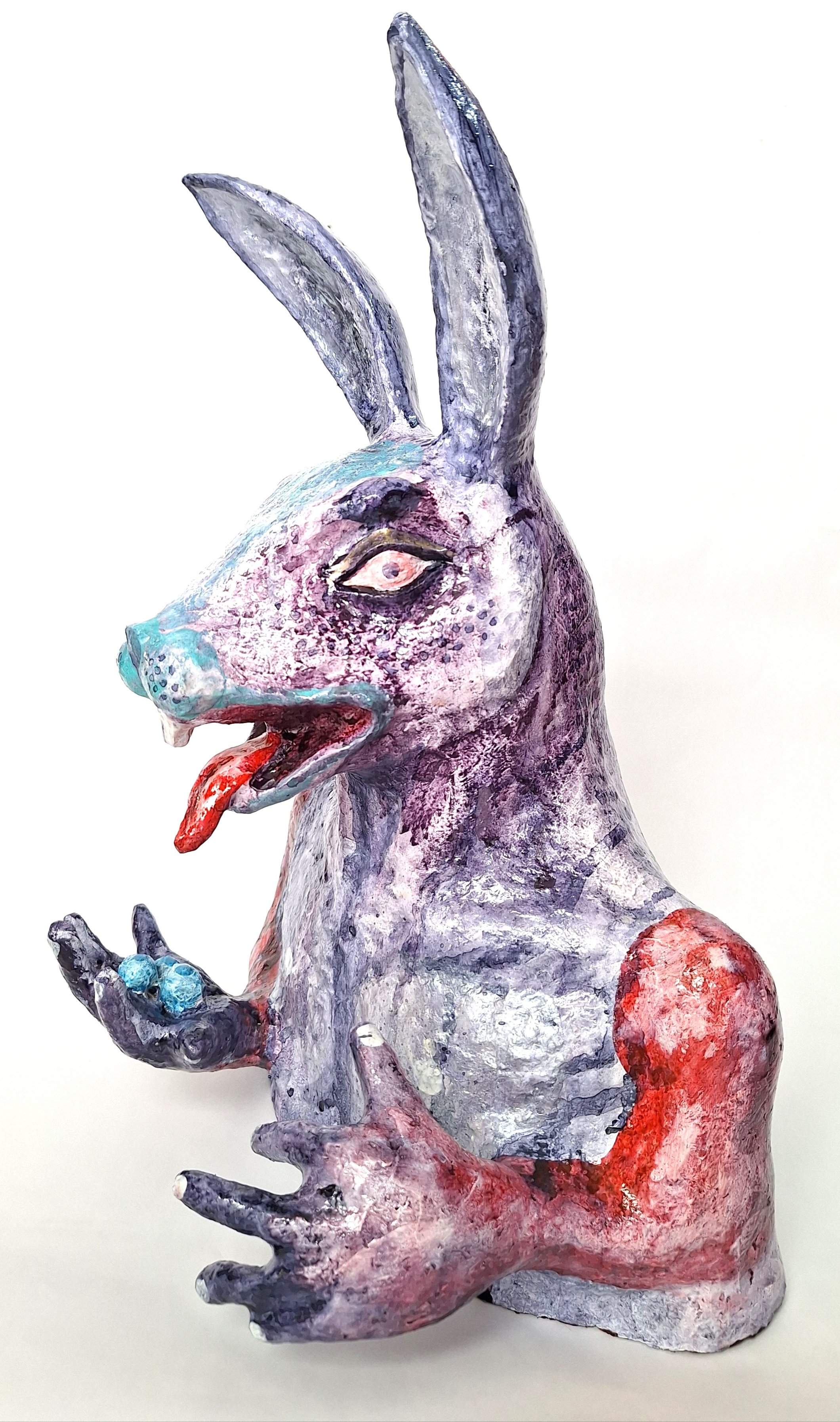
Acrylic on papier-mâché, 24 . 24 . 40 cm, 200 USD
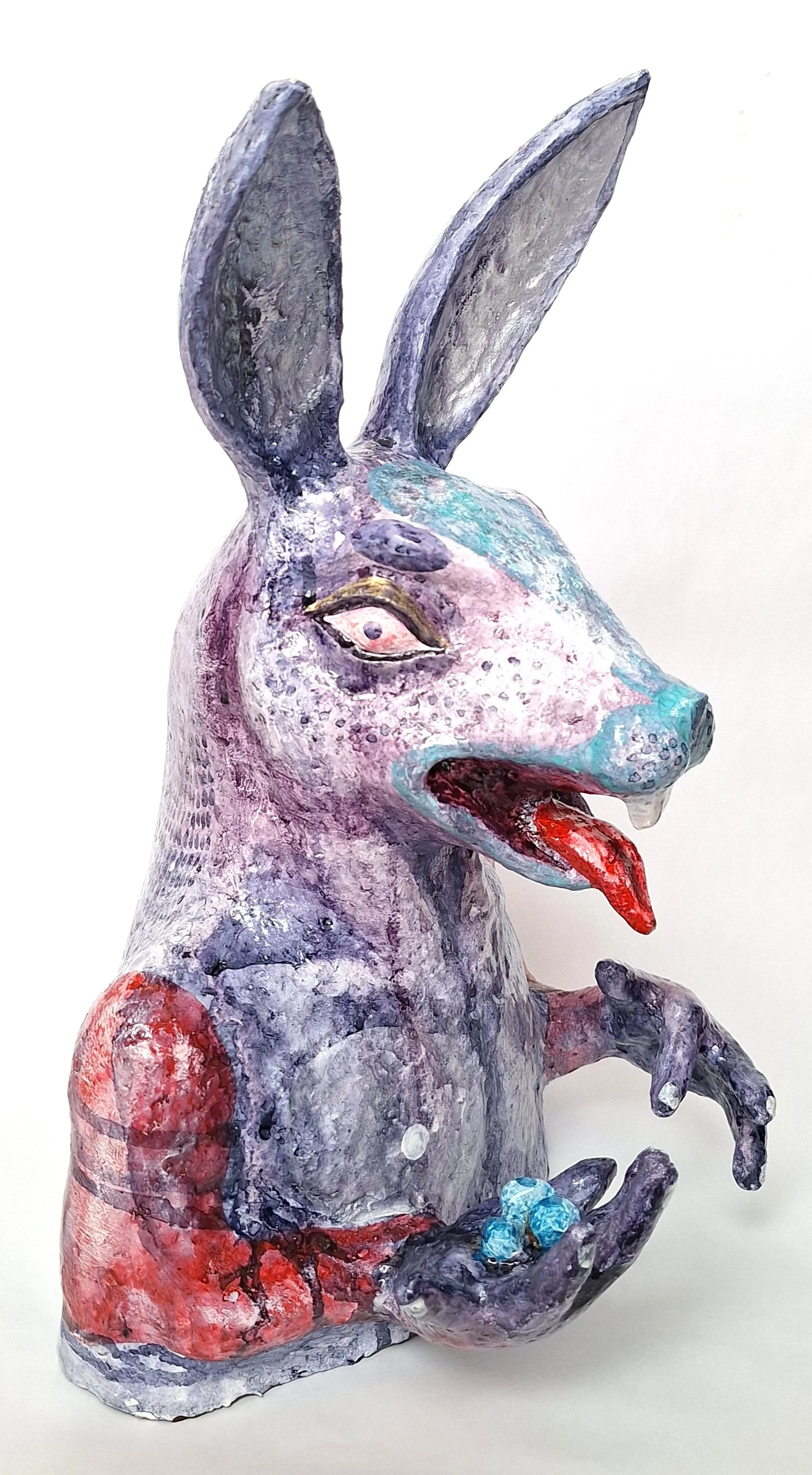
Rabbit (alternative view)
The stories in Kalila and Dimna, whose main characters are animals, are among my favorites. But in my view, this story isn’t only a moral fable. It’s also an exploration of power and civil resistance.
Source
This story is inspired by a tale of the same name in a collection of ancient stories known as Kalila and Dimna. Originally written in Sanskrit by the Indian philosopher Bidpai, they were translated from Arabic into Middle Persian in the 12th century by Nasrallah Monshi. By using a free translation method, Monshi preserved only the essence of the original, thereby creating a distinctive work of Persian literature.
My telling of the story
A powerful lion lived in a vast forest. He hunted every day, killing many animals. Living in constant fear, the creatures of the forest grew weary of his violence. One day they gathered together and approached the lion.
“O King of the Forest,” they said, “if you continue hunting every day, all of us will eventually perish. Instead, let one animal come to you each day in turn as your meal. In this way, you will not have to hunt, and our species will not be wiped out all at once.” The lion accepted their proposal.
From then on, one animal was sent to his den each day. Eventually, the lot fell upon a small rabbit who thought to himself, “If I go to the lion today, I will surely be killed. I must find a way to not only save myself, but also free the forest from this tyrant.” So he deliberately set out late.
When he finally arrived, the hungry and enraged lion roared, “Why are you so late?” Feigning fear, the rabbit replied, “Your Majesty, six rabbits were sent to you today. On the way, another lion attacked us. He ate the other five and sent me to tell you that this forest belongs to him.”
Hearing this, the lion became furious. “Take me to this insolent lion at once!” he commanded.
The rabbit led him to a deep well and said, “He lives inside this fortress.”
The lion looked into the well, and saw his own reflection in the water. Blinded by anger, he mistook it for his rival. He roared, and the reflection roared back. Without hesitation, he leapt into the well to attack his imaginary enemy. Instead, he fell into the water and drowned.
Joyfully, the rabbit returned to the other animals and announced the lion’s death. Finally freed from oppression, the creatures of the forest celebrated their liberation.
Takeaways
The most dangerous traps in life are those hidden beneath the ‘soil’ of habit, pride, and negligence.
Disregarding the advice of the wise exposes one to danger.
Fate should not be used as an excuse for one’s own faults.